

A lot of people search for ways to make money online, and sooner or later they run into the same idea: selling products on Amazon.
But here’s the thing most beginners don’t realize. Amazon is not just a place where sellers make money. It’s an entire ecosystem, and a lot of people inside that ecosystem are earning income without ever running a traditional store.
I’ve seen bloggers, freelancers, marketers, and content creators all making money around Amazon in different ways. Some focus on traffic, some focus on services, and others build small content businesses that quietly generate income month after month. The interesting part is that many of these methods don’t require inventory, warehouses, or large startup budgets.
If you’ve ever looked into side hustles online, you’ve probably seen similar opportunities on other platforms too. For example, some creators Make Money on Etsy without manufacturing their own products by focusing on design, traffic, or digital goods. The same kind of indirect opportunity exists around Amazon if you know where to look.
Another example is people who Make Money Doing Amazon Reviews. Instead of selling products, they test items, publish honest reviews on blogs or YouTube, and earn commissions or sponsorships when people decide to buy. It’s a simple idea, but it works because buyers trust real opinions far more than traditional advertising.
In this guide, I’m going to walk through several practical ways people earn money with Amazon without becoming product sellers. Some of these methods are beginner-friendly, while others turn into full online businesses once you get good at them.
Amazon Affiliate (Amazon Associates)
If you ask people in the online money world where to start with Amazon, most of them will point you to the same thing: Amazon Associates.
It’s the classic method. No inventory, no customer service, no shipping headaches. You simply recommend products using a special Amazon link, and when someone buys through that link, you earn a commission. Simple concept. But don’t underestimate how powerful it can be.
When I first started learning about affiliate marketing, I noticed something interesting. A lot of websites ranking on Google were basically product recommendation sites.
Pages like “Best headphones under $200” or “Best camping tents for beginners.” These sites weren’t selling anything themselves. They were just reviewing products and linking to Amazon. If a reader clicked the link and bought something—even if it wasn’t the exact product—the site owner still earned a commission.
You can promote Amazon products in several ways. Some people build SEO websites and publish product reviews that rank on Google. Others create YouTube review videos where they test gadgets, kitchen tools, or camping gear.
I’ve also seen creators getting solid traffic from Pinterest by posting product idea pins that link back to blog articles. And of course, simple blog list posts still work surprisingly well.
The commission rates usually range from about 1% to 10%, depending on the category. Electronics tend to be lower, while categories like home goods or beauty can be higher. It might not sound like much at first, but once your content starts getting consistent traffic, those small percentages can quietly stack up month after month.
One blogger I know built a small niche site reviewing kitchen tools. Nothing fancy—just honest reviews and comparison articles. Over time, some of his posts started ranking on Google.
A single article about “best kitchen knives” now brings in hundreds of dollars per month from Amazon affiliate commissions alone. And the crazy part? That article was written years ago. Once the traffic is there, the links just keep working in the background.
Amazon Influencer Storefront
Another way people make money on Amazon without selling anything is through the Amazon Influencer Storefront. If you already have some kind of social media audience, this model can work surprisingly well.
Instead of building a full website, Amazon lets you create your own storefront page where you list recommended products. Then you simply send your followers there.
The logic behind it is pretty straightforward. You create content on social media, mention or demonstrate a product, and drop your storefront link. When someone clicks that link, browses your recommended items, and buys something, you get a commission.
No inventory, no shipping, no dealing with angry customers. Amazon handles the boring stuff.
Platforms like TikTok, YouTube, Instagram, and Pinterest are where most of the traffic usually comes from.
For example, a short TikTok video showing “5 Amazon kitchen gadgets you didn’t know you needed” can easily get thousands of views. If the content is interesting enough, a portion of those viewers will click your storefront link just out of curiosity.
I’ve seen creators doing this in all kinds of niches. Tech gadgets, home organization, camping gear, even simple everyday tools. One YouTube creator I follow posts quick product demos and links everything in his Amazon storefront. Some of his videos barely hit 10,000 views, but the links keep generating small commissions every day.
What I like about this model is that you don’t need millions of followers. You just need the right audience. A few thousand engaged followers who actually trust your recommendations can easily outperform a huge account with zero engagement. Online money works like that more often than people expect.
Amazon Product Reviewer
Another path people often overlook is simply reviewing products. Sounds almost too obvious, right? But the truth is, product reviews drive a massive amount of buying decisions online.
Before most people buy something on Amazon, they search Google or YouTube for reviews. If your content shows up there, you’re sitting right in the middle of the buying decision.
There are several ways to play this game. Amazon even has an official program called Amazon Vine, where selected reviewers receive products in exchange for honest reviews. But most creators don’t rely on that. Instead, they build review content on platforms like YouTube or blogs. A simple review video or article can quietly generate traffic for years.
The money usually comes from a mix of sources. Affiliate commissions are the obvious one—link the product through Amazon Associates and earn a percentage when viewers buy. But once your reviews start getting attention, brands sometimes reach out directly. They’ll offer free products, small sponsorship deals, or early access to new gadgets.
I remember watching a small tech reviewer on YouTube who started by reviewing cheap desk accessories and phone stands. Nothing fancy. Most of the products were under $30. But those videos slowly stacked views over time. Eventually brands started mailing him products for free just to get featured on his channel.
What’s interesting is that you don’t need to be a “big influencer” to make this work. In fact, smaller reviewers often build more trust because their content feels more honest. When someone is about to spend money, they don’t want flashy marketing. They want a real opinion from someone who actually used the product.
Amazon Kindle Direct Publishing (KDP)
One method that surprised me when I first discovered it was Amazon Kindle Direct Publishing, usually called KDP.
Most people think Amazon is only for selling physical products, but that’s not really true. With KDP, you can publish digital books and earn royalties every time someone buys or downloads them. No warehouse, no shipping, no dealing with returns. Amazon handles all of that.
The basic money flow is actually very simple. A reader finds your book on Amazon, clicks the buy button, Amazon processes the payment, and then you receive a royalty. Depending on your pricing and book category, Amazon usually pays either 35% or 70% of the sale price. Once the book is live, it can keep generating sales for months or even years.
The funny thing is, a lot of successful KDP books are not traditional “books” at all. Some creators publish coloring books for kids or adults. Others create journals, planners, or low-content books like notebooks and activity books.
Recently I’ve also seen people using AI tools to help write short guides or niche ebooks much faster than before.
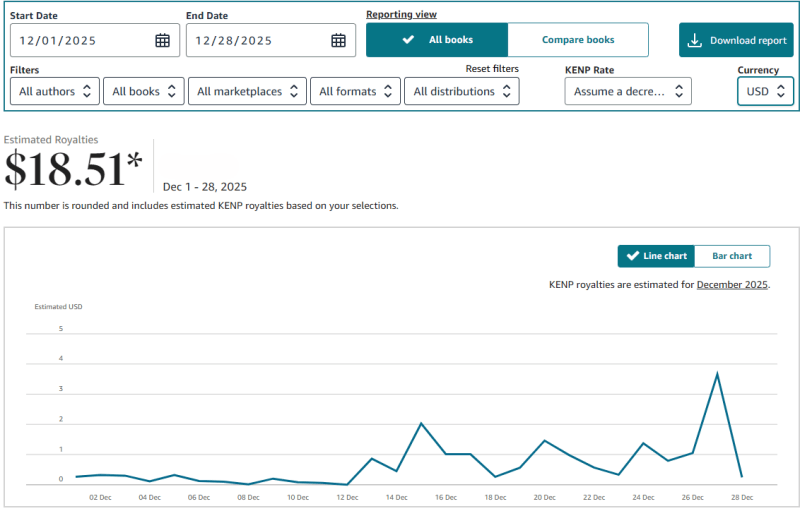
I once came across a small publisher who focused entirely on puzzle books and coloring books. Nothing fancy, just simple designs and consistent publishing. Over time he built a catalog of dozens of titles. Individually, each book didn’t make much money, but together they created a steady stream of monthly royalties.
You’ll notice something interesting about KDP after a while. It’s not about writing one perfect bestseller. The real game is building a catalog. A few books might flop, a few might do okay, and occasionally one will take off. When that happens, the royalties start coming in while you’re off doing something else.
Amazon Merch on Demand
Another interesting way to make money on Amazon without touching inventory is Amazon Merch on Demand.
The idea is pretty simple: you design graphics, upload them, and Amazon turns those designs into physical products like T-shirts or hoodies. When someone orders one, Amazon prints it, ships it, and handles the customer service. You just collect the royalty.
The workflow is honestly pretty straightforward. You create a design, upload it to the platform, select which products you want it printed on, and set the price.
That’s it. If someone buys the item, Amazon produces it on demand and sends you a royalty payment. No warehouse, no printing machines in your garage, none of that headache.
Most people start with simple products like T-shirts, hoodies, and phone cases. You don’t even need to be a professional designer. A lot of successful designs are just funny phrases, niche jokes, or hobby-related slogans. Think fishing jokes, dog lover quotes, gym humor—stuff that makes someone say, “Yeah, I’d wear that.”
I once saw a guy online who built his entire Merch account around hiking and camping humor. Simple designs like “I’d rather be on the trail” or “Camp first, work later.” Nothing artistic or fancy. But hikers love that kind of stuff. Some of his shirts sold hundreds of copies over time.
You’ll quickly realize something about print-on-demand: most designs won’t sell at all. That’s just the reality. But occasionally one design hits the right audience and starts selling every week. When that happens, it feels a bit like finding a small digital vending machine quietly printing money in the background.
Amazon Mechanical Turk
Not every Amazon money-making method involves content or selling things. There’s also Amazon Mechanical Turk, usually called MTurk.
It’s basically Amazon’s crowdsourcing platform where companies post small online tasks and people complete them for payment. Think of it like a giant marketplace for tiny digital jobs.
The tasks are usually simple but repetitive. Things like labeling images, identifying objects in photos, reviewing short pieces of content, or helping train AI systems. Companies need thousands of these micro-tasks done quickly, and instead of hiring full-time staff, they outsource them to people on MTurk.
I remember trying it out for a few hours just to see how it worked. Most tasks only paid a few cents each, so at first it felt almost ridiculous.
But once you understand which tasks are worth doing and which ones to ignore, the process gets faster. Some experienced users can complete dozens or even hundreds of tasks in a session.
Realistically, this isn’t a “get rich” method. Most people earn somewhere between $1 and $50 per day depending on how much time they put in and what tasks are available. It’s more like digital piecework. You trade time for small payments.
That said, a lot of people use MTurk as a starting point for online work. It teaches you how online task platforms operate and how remote micro-jobs work. And once you get comfortable with that kind of environment, you start spotting better opportunities elsewhere.
Read More:How to Make Money Online for Beginners: 15 Best Ways
Amazon Audible Audiobooks
Most people know Amazon sells books, but fewer realize how big the audiobook market has become. Audible, which is owned by Amazon, is one of the largest audiobook platforms in the world.
And yes, regular creators can publish there too. If you can turn written content into audio, there’s a real opportunity to earn royalties.
The process is actually pretty straightforward. First you write a book or some kind of structured content. Then you record the audio version, upload it through Amazon’s audiobook publishing system, and list it on Audible. Once it goes live, listeners can buy or stream it, and you receive a royalty from every purchase.
Now here’s something interesting I noticed over the years. Many successful audiobooks aren’t massive 300-page novels. Some are short guides, niche educational content, or practical topics people want to learn while commuting or working out. Think productivity tips, personal finance basics, or quick skill-building guides.
A while back I came across a small creator who published a series of short self-improvement audiobooks. Each one was only about an hour long. Nothing groundbreaking, just simple advice presented clearly. But because the topics were practical, people kept buying them.
You’ll start to notice a pattern with platforms like Audible. Once a piece of content is uploaded and indexed, it can sit there for years quietly generating sales. It’s not always explosive money, but sometimes steady royalties beat chasing the next shiny trend online.
Amazon Handmade
When people hear the word handmade, they often imagine someone sitting at a desk crafting products all day. But the reality is a bit different.
Amazon Handmade allows creators to sell handcrafted-style products, and in many cases the seller isn’t personally making every item. Some people run this more like a design business rather than a traditional craft business.
Here’s the model I’ve seen working in the wild. Someone creates a product design—maybe custom jewelry, engraved gifts, or niche home decor. Instead of manufacturing everything themselves, they partner with a small workshop or factory that produces the item based on that design. The seller focuses on branding, listings, and marketing on Amazon.
You’ll notice a similar strategy on platforms like Etsy. A lot of store owners specialize in designing personalized products such as wedding gifts, engraved bracelets, or custom pet tags. Once an order comes in, the production partner handles the manufacturing and shipping while the store owner manages the storefront.
A friend of mine once experimented with this model by designing simple engraved keychains. The design work took maybe a weekend. After that he worked with a small supplier who handled production whenever an order came in. His main job became managing the Amazon listing and customer communication.
So technically, the product is handmade—but the real skill is in product ideas and positioning. If you can design something people emotionally connect with, the production side becomes just another piece of the system.
Amazon Dropshipping (Price Arbitrage)
This one is a bit different from the usual methods people talk about. Technically you’re not selling your own products, but you’re still making money using Amazon.
The idea is simple: find products on Amazon, list them on another platform like eBay or Shopify, and sell them for a slightly higher price. When someone places an order, you purchase the item from Amazon and ship it directly to the customer.
In other words, the flow looks like this. You find a product on Amazon that sells for, say, $20. Then you list that same product on eBay for $28. When someone buys it, you simply order it from Amazon and ship it to the buyer’s address. The price difference becomes your profit after fees. It’s basically a form of online arbitrage.
When I first heard about this model years ago, I thought it sounded a bit crazy. Why would anyone buy something on eBay that’s cheaper on Amazon?
But once you watch the market long enough, you start noticing something interesting. Different platforms have different buyers, different search behavior, and sometimes completely different prices for the same item.
I once saw a seller running a small eBay store with hundreds of listings, most of them sourced from Amazon. The margins were not huge—sometimes only a few dollars per order—but the volume made it work. If ten or twenty orders come in per day, those small spreads start adding up.
Of course, this method requires careful attention to platform rules and fees. But from a pure business perspective, it’s a classic arbitrage play: find a price gap between two marketplaces and quietly capture the difference.
Amazon Product Research Service
Here’s a method a lot of people overlook: you don’t have to sell products on Amazon to make money from Amazon sellers. Many sellers struggle with one of the hardest parts of the business—finding profitable products to sell. That’s where product research services come in.
The concept is pretty straightforward. Instead of launching your own store, you help other sellers discover products with good demand and manageable competition. You analyze market data, check pricing trends, estimate sales volume, and present the seller with product ideas they can potentially launch.
The money comes from charging a research fee. Some freelancers charge around $50 for basic research reports, while experienced researchers might charge $200 or even $500 per product idea depending on the depth of analysis. For many sellers, paying for good research is cheaper than launching the wrong product and losing thousands of dollars.
I once saw a freelancer on Upwork who specialized only in Amazon product research. He didn’t run an Amazon store himself. Instead, he spent his time analyzing niches, using tools like Jungle Scout and Helium 10, and delivering product reports to clients. Apparently, he had a steady stream of sellers hiring him every month.
When you think about it, this makes sense. Selling on Amazon is risky if you choose the wrong product. So if you develop the skill to identify good opportunities, sellers are often happy to pay for that insight.
Amazon Virtual Assistant
Not everyone who makes money from Amazon is actually selling products. In fact, a huge number of sellers hire remote helpers to run parts of their business.
These people are usually called Amazon Virtual Assistants, or simply Amazon VAs. If you’re organized and comfortable working online, this can turn into a pretty steady income stream.
The work itself is not complicated, but there are a lot of small tasks involved in running an Amazon store. Sellers often outsource things like listing optimization, uploading products, replying to customer messages, and managing advertising campaigns.
None of this requires owning inventory—you’re simply helping the seller operate their store.
I once spoke with a seller who was running multiple Amazon listings and was completely overwhelmed by the daily workload. Eventually he hired two virtual assistants just to handle product listings and customer support. That freed him up to focus on sourcing new products and scaling the business.
From what I’ve seen across freelance platforms, the hourly pay usually ranges between about $5 and $30 per hour depending on experience. Beginners often start with simple tasks like product uploads or basic customer service, while experienced assistants can handle advertising management or listing optimization.
The interesting part is that once you understand how Amazon stores operate behind the scenes, you start developing real e-commerce skills. Some people stay as virtual assistants for years, while others eventually launch their own stores after learning the system from the inside.
Amazon SEO / Listing Optimization
Here’s something a lot of new sellers underestimate: writing a good Amazon listing is harder than it looks.
Most sellers can source products, but when it comes to titles, keywords, and product descriptions, many of them honestly have no clue what they’re doing.
That’s where listing optimization services come in.
Amazon has its own search algorithm, and if a listing isn’t optimized properly, it simply won’t show up when customers search for products. So the job here is to help sellers improve visibility and conversion. That usually involves keyword research, rewriting product titles, optimizing bullet points, and crafting persuasive descriptions.
I remember looking at a few poorly written listings years ago and thinking, “Wow… no wonder these products aren’t selling.” Some titles were basically keyword soup, and the descriptions read like they were translated by a robot. Fixing that kind of mess can make a huge difference.
Because this work directly impacts sales, sellers are often willing to pay for it. Depending on experience and depth of research, listing optimization services usually range anywhere from about $100 to $1000 per listing.
Once you understand how Amazon search works and how buyers read product pages, this becomes a surprisingly valuable skill. After all, every seller wants one thing: better rankings and more sales.
Amazon Product Photography
One thing that directly affects whether a product sells on Amazon is the photos.
If you’ve ever browsed Amazon listings, you’ll notice something immediately—some products look professional, clean, and convincing, while others look like they were shot on a kitchen table with bad lighting. Guess which ones usually sell better?
Because of this, many Amazon sellers hire people specifically to create high-quality product images. These photos are used in product listings to show the item from different angles, highlight features, and make the product look appealing.
In a competitive marketplace, good visuals can make a huge difference.
The interesting part is that you don’t necessarily need to run an Amazon store to make money here. You can simply offer product photography services to sellers. Many freelancers get clients through platforms like Fiverr or Upwork, where sellers regularly look for photographers or designers to create listing images.
Depending on the complexity of the shoot, prices usually range anywhere from around $50 to $500 per product. Basic white-background images are on the lower end, while lifestyle photography or infographic-style images can command much higher fees.
I’ve even seen small studios that specialize only in Amazon listing images. They don’t sell products themselves—they just help sellers present their products better. In the world of e-commerce, good photos often sell the product before the description even gets read.
Amazon Seller Leads Generation
Here’s a model that many people in the online marketing world quietly make money from: sending traffic to Amazon sellers.
Instead of selling products yourself, you focus on bringing potential buyers to a seller’s product page. If those visitors turn into customers, you get paid for the leads or the resulting orders.
There are several ways to generate that traffic. Some marketers run Google Ads targeting product-related keywords. Others use Pinterest to drive visual traffic toward product recommendations. And of course, SEO still works well—ranking articles or comparison pages that naturally guide readers toward specific Amazon listings.
The business model is pretty simple. You help a seller generate sales, and in return you charge based on performance. In some cases, it’s a flat fee per order. In other cases, you get a percentage of the sale or a fixed commission for every qualified lead you send.
I remember seeing a small marketing agency that focused only on traffic for Amazon brands. They weren’t launching products themselves. Instead, they built niche websites that ranked on Google for product-related searches and then directed visitors toward their clients’ Amazon listings.
Once you start looking at Amazon as a traffic ecosystem rather than just a marketplace, this model makes a lot of sense. Sellers need customers. If you can consistently deliver those customers, someone will gladly pay you for it.
Final Thoughts
When people first think about making money on Amazon, they usually imagine one thing: selling products. Warehouses, inventory, shipping boxes, dealing with returns… the whole e-commerce grind. But as you’ve probably noticed from this list, there are actually a lot of ways to earn money around Amazon without ever becoming a seller.
In fact, once you step back and look at the ecosystem, Amazon is less like a store and more like a giant economic machine. There are sellers, but there are also reviewers, marketers, designers, researchers, assistants, and traffic generators. Some people make money selling products. Others make money supporting the people who sell products.
I’ve been around the online business world long enough to notice something interesting. The people who often do best are not always the ones trying to do everything themselves. Sometimes the smarter move is to find a small role in a big system and get really good at that one thing.
You might start with affiliate links, product reviews, or helping sellers optimize listings. Over time, you’ll probably discover which parts of the Amazon ecosystem fit your skills best. And once you do, it becomes much easier to turn that skill into consistent income.
So if you came here wondering whether it’s possible to make money on Amazon without selling anything… the answer is yes. Actually, there are dozens of ways. The real challenge isn’t finding an opportunity. The real challenge is picking one and sticking with it long enough to see results.
Frequently Asked Questions
Can you really make money on Amazon without selling physical products?
Yes, absolutely.
A lot of people assume Amazon only works if you sell inventory, but that’s just one piece of the puzzle.
You can earn through affiliate marketing, product reviews, KDP publishing, Merch on Demand, virtual assistant work, listing optimization, and other service-based methods.
Say it another way: you don’t always need to sell products yourself — sometimes it’s easier to make money by helping other people sell.
What is the easiest method for beginners?
If you’re brand new, I’d usually say Amazon Affiliate is the easiest place to start.
The reason is simple. You don’t need inventory, you don’t need customer support, and you don’t need a big budget. You can start by writing product recommendation articles, making simple review videos, or posting content on Pinterest. It’s one of those models that looks small at first, but once traffic starts coming in, it can snowball.
Do I need a website to make money on Amazon?
No, not always.
A website helps a lot, especially for SEO traffic, but it’s not the only option.
Some people use YouTube, TikTok, Instagram, or Pinterest to promote products and drive clicks.
Others work behind the scenes by offering services to Amazon sellers, such as product research, listing optimization, or customer support. So no, a website is useful, but it’s not mandatory for every method.
How much money can you realistically make?
This depends on the method, your skill level, and how long you stick with it.
Some beginners make an extra $50 to $300 per month in the beginning.
Others build this into a serious side hustle or full-time income. The brutal truth is that most people quit too early. They try something for two weeks, see nothing, and think it doesn’t work. Online income usually rewards consistency more than excitement.
Which method has the best long-term potential?
In my opinion, content-driven methods usually have the strongest long-term upside. That includes affiliate sites, YouTube reviews, and KDP publishing. Why?
Because once your content is live, it can keep working for you in the background. Service-based work like Amazon VA or listing optimization is also solid, but that usually means trading time for money. Content is slower at the start, but it has more leverage later.
Is this passive income?
Sometimes yes, but don’t romanticize it too much.
A lot of people throw around the phrase passive income like it’s magic money.
In reality, most Amazon-related income starts out very active. You write the article, record the video, optimize the listing, or publish the book first. The passive part only shows up later, after the work has already been done. That’s the part people conveniently leave out.
Do I need to spend money to get started?
Not necessarily.
Some methods can be started with almost no money, especially affiliate marketing, reviews, or virtual assistant services. Others may require small tools, software, or design costs if you want to move faster.
But compared with starting a normal e-commerce business, these methods are much lighter. You’re not buying stock, renting storage, or gambling thousands of dollars on one product.
What is the biggest mistake beginners make?
The biggest mistake is trying ten methods at once and finishing none of them.
I’ve seen this over and over again. People get excited, open five tabs, watch twenty videos, and start acting like they’re building an empire. Then a week later, everything is dead.
Pick one method. Learn it. Test it. Stick with it long enough to get real feedback. That’s boring advice, but boring advice usually makes money.