
I’ll say this straight — most people scrolling food videos are only thinking about what to cook. A small group is thinking about what to film. An even smaller group is thinking about what to monetize. That last group is where the money sits.
I didn’t start with some big creator dream either. I just noticed one thing: food content gets watched, rewatched, and saved. Attention like that is not just entertainment — it’s fuel.
When people search How to Make Money on TikTok, they usually fall into the same rabbit holes — dance trends, viral hacks, influencer gossip. Meanwhile, boring-looking food tutorial accounts are quietly printing money with fewer followers and less drama. No shouting, no acting, just repeatable content.
You’ll find the less “celebrity” the format is, the more stable the monetization can be.
I’ve talked with creators who never considered themselves marketers. They just kept posting recipes, step-by-step, same camera angle, same kitchen counter. Six months later they had brand deals, product income, and digital downloads selling in the background.
No magic. Just volume plus structure. Honestly, half of them didn’t even realize they were building a funnel — but they were.
If your goal is to Make Money Online from Home, food tutorial content is one of the most practical entry points. You already eat. You already cook something. You already have a phone. The gap between “daily life” and “monetizable content” here is tiny. That’s why this niche is powerful. Low barrier, high repeat demand, global audience.
In this guide, I’m not going to sell you fantasy numbers or overnight success nonsense. I’ll walk through the real monetization models, how they actually work, where the money comes from, and what numbers are realistic.
Some methods are fast cash. Some are slow but compounding. Stack them right, and a simple cooking channel turns into a home-based revenue machine.
TikTok Creator Fund and Revenue Sharing
When people ask me how to make money from TikTok food tutorial videos, most of them jump straight to selling products. But the first layer — and the most underestimated one — is platform payout itself. Yes, TikTok will literally pay you just for views if your account and region are eligible.
It’s not fantasy money, but it’s real money. And if your food videos are consistent, this becomes your base income floor.
The basic flow is actually simple. You publish food tutorial videos → videos get views → your account joins the Creator Fund or Creativity Program → TikTok calculates qualified views → payout shows up in your dashboard. That’s it.
No customer support, no shipping, no refunds, no bullshit buyers. The platform handles the math. Your job is traffic. I’ve seen cooking channels with very average filming quality still get paid just because they post daily and hit steady watch time.
Now let’s talk numbers, because vague motivation talk is useless. Different countries and programs pay differently, but a common range is roughly $0.20 to $1+ per 1,000 qualified views under newer long-form creativity programs.
Old creator funds were lower — sometimes painfully low — but newer revenue share models reward longer watch time. A food tutorial that runs 60–90 seconds with strong retention will usually earn more than a 12-second flashy clip.
One creator I tracked was averaging about 3–5 million monthly views on recipe videos and pulling in low four figures per month just from platform payout. Not life-changing — but not pocket change either.
The core point is this: watch time beats everything. Not followers. Not likes. Not how pretty your kitchen looks. If people actually stay and watch your recipe from step one to plating, you win. That’s why step-by-step food tutorials perform well — they naturally hold attention.
I always tell people: slow down your cuts, show the texture, show the oil, show the damn steam. Retention equals money here. Say it in a rough way — you’re not filming art, you’re farming watch minutes.
Don’t expect instant riches from this model alone. Think of it as your traffic salary. It rewards volume and consistency. If you post three solid food tutorials a day and one pops, the payout compounds.
If you disappear for two weeks, income drops to near zero. Very mechanical. Very fair. Very unforgiving. But once it starts rolling, it’s one of the cleanest ways to make money from TikTok food tutorial videos without selling anything at all.
Cooking Live on TikTok
Live cooking is a very different beast compared to normal short videos. When people search how to make money from TikTok food tutorial videos, they usually think about uploads — but live streaming is where the cash speed can jump.
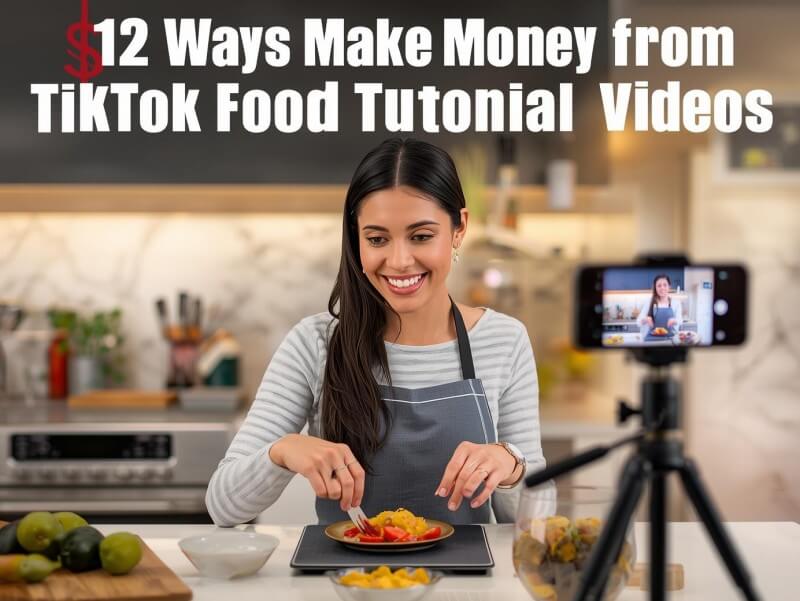
I’ll be honest: the first few lives feel awkward as hell. You talk to the screen, nobody answers, and you wonder why you’re even doing this. Then one day 200 people sit in your live room watching you fry garlic, and gifts start popping. That’s when it clicks.
The monetization flow is straightforward. You start a live → cook in real time → explain steps → interact with viewers → viewers send virtual gifts → gifts convert into diamonds → diamonds convert into cash. TikTok takes a cut, you take the rest.
No complicated funnel. No website required at the beginning. Just camera, stove, and your mouth working at the same time. The more you respond to comments, the longer people stay. The longer they stay, the more likely they tip. It’s stupidly direct.
Let’s talk money math, not fantasy numbers. Gift conversion rates change, but roughly creators often receive around 30–50% of gift value after platform share. A small cooking live with 100–300 concurrent viewers might bring in $20–$80 in gifts if engagement is decent. Bigger food streamers can hit a few hundred dollars per live session.
I’ve seen a meal-prep creator doing 90-minute weekly lives — nothing fancy — averaging about $300 per session from gifts plus subscriber badges. Not celebrity level. Just consistent execution.
The core lever is interaction, not cooking skill. That part surprises people. You can be a decent cook and still make money. But if you ignore chat, you’re dead. Say names. Answer questions. Ask what spice they would add. Let viewers vote the next step.
You’ll notice retention jumps when people feel involved. One friend of mine literally lets viewers choose the sauce every live — messy but profitable. Live money is attention money, not Michelin-star cooking.
If you want this to work, schedule matters more than motivation. Fixed live time beats random bursts. Same hour, same days, repeat. Train your audience. Treat it like a TV show, not a hobby stream. Some sessions will be quiet — yeah, it happens — but over weeks, viewer overlap builds.
When it works, it feels less like posting content and more like running a small interactive kitchen business in your pocket. Way more fun, and way more raw.
Sell Products with TikTok Shop
If you ask me which model scales fastest in this niche, I won’t hesitate — TikTok Shop. This is where content turns directly into transactions. No email funnel first, no “link in bio, go read blog,” none of that slow stuff.
Viewer watches your cooking step → sees the tool or ingredient → taps → buys. Done. When people talk about how to make money from TikTok food tutorial videos at real speed, this is usually the engine behind those big numbers screenshots.
What can you actually sell? Way more than beginners think. Kitchen knives, pans, air fryers, cutting boards, spice sets, measuring tools, food storage boxes, oil sprayers, recipe cards, apron kits — all of these convert well on camera.
Small, problem-solving tools sell best. Anything that makes cooking faster, cleaner, or more “wow” visually has an edge. I once saw a creator sell thousands of a stupidly simple garlic crusher just because the demo shot was satisfying. Not premium. Just practical.
The format is flexible, and that’s the beauty of it. You can embed the product directly in a tutorial video. You can do “3 tools I use every day in my kitchen.” You can compare cheap vs expensive knives.
You can even build a whole recipe around one device. Soft sell works better than hard pitch. Show it in use, let the viewer connect the dots. When the oil doesn’t splatter and the pan wipes clean in one shot, you don’t need a speech — the product sells itself.
Money math here is commission based. Depending on the product and seller setup, creators often get anywhere from 10% to 40% per sale. Let’s say you promote a $25 kitchen gadget with 20% commission — that’s $5 per order. If one decent video pushes 300 orders over a week, that’s $1,500 from one clip.
Not every video hits, obviously. Some flop hard. But the winners overpay the losers. I’ve watched mid-size food accounts with under 100k followers out-earn bigger creators just because their product match was tight.
The real core is product–content fit. Don’t randomly attach products that have nothing to do with the dish. Viewers are not stupid. If you’re making soup and suddenly push a blender you didn’t even use, trust drops.
When the tool is naturally part of the workflow, conversion feels smooth. Say it bluntly — relevance prints money, mismatch kills it. Test, rotate, track which tools actually get clicks. Treat it like a lab, not a guessing game.
Earn Affiliate Commissions from Kitchen Products
Let me say this straight — affiliate commission is the lazy-smart version of selling. You don’t handle products, you don’t ship anything, you don’t deal with refunds. You recommend, they buy, you get paid. That’s it.
When people research how to make money from TikTok food tutorial videos, this method is often sitting right there but gets ignored because it looks “too simple.” Simple is good. Simple scales.
The workflow is clean. You join affiliate programs → get your tracking links → create food tutorial videos → recommend the tools or ingredients you actually use → put the links in bio or landing page → viewers click and buy → you earn commission.
No TikTok Shop approval needed. No inventory. This is why a lot of smaller food creators start here first before touching store features.
You can promote more than just obvious kitchen gear. Yes — knives, pans, blenders, air fryers, thermometers, storage containers convert well. But also cookbooks, specialty ingredients, meal kits, spice brands, baking molds, even online cooking classes.
I once saw a creator make steady money just recommending three beginner baking tools under every video. Same links. Reused for months. Still converting. Sometimes boring equals profitable.
Commission rates vary, so don’t believe random hype screenshots. Typical kitchen product affiliate commissions sit around 3%–10% on big retail platforms, sometimes 15%–30% on niche brands or direct programs.
Quick math example: a $120 air fryer at 8% commission gives you $9.6 per sale. If a tutorial video drives 200 purchases over time, that’s nearly $2,000 from one link set. I’ve seen blog + TikTok combo creators stack this quietly in the background while everyone else is chasing viral hits.
The key is demonstration, not recommendation. Don’t just say “link in bio.” Show the damn tool in action. Let people see the difference. Before vs after. Cheap vs solid. Fast vs slow. You’ll notice clicks go up when the benefit is visible, not verbal. Say it bluntly — if viewers can’t see why it matters, they won’t click. Affiliate money rewards proof, not opinions.
Sell Digital Recipe eBooks and Meal Guides
This one is my personal favorite because the margin is almost unfair. You create it once, you sell it forever. No inventory, no shipping, no customer asking where the package is. Just files and traffic.
When people study how to make money from TikTok food tutorial videos seriously, sooner or later they realize: views are temporary, but digital products are assets. A good recipe eBook keeps paying long after the video that promoted it dies.
You’re not limited to a traditional “recipe book.” That’s beginner thinking. You can sell themed recipe packs, weekly meal prep plans, weight-loss cooking guides, air fryer collections, budget meal blueprints, high-protein menus, diabetic-friendly cooking sheets, even step-by-step cooking checklists. Short, focused, problem-solving products often outsell big fat cookbooks.
People don’t always want 200 recipes. Sometimes they just want “7 dinners under 20 minutes.”
Where to sell? Plenty of options. You can use Gumroad, Etsy, Shopify, or your own website. Some creators use simple landing pages with Stripe checkout. Others stack marketplaces plus their own store at the same time.
I’ve seen a small fitness-food TikTok account sell a $19 meal prep PDF through a basic store page and hit 300+ sales in two months. No fancy brand. Just tight positioning and clear promise.
The selling method is softer than people expect. You don’t scream “buy my book.” You show the system. Post food tutorials, show consistency, mention you organized your recipes into a downloadable guide, and point to the link. That’s it. Viewers who already trust your cooking style convert naturally.
Say it bluntly — content builds appetite, product collects money. If the recipes work on screen, the PDF sells off screen.
Pricing is flexible, but most digital recipe products live in the $9–$39 range. Low enough for impulse, high enough for real revenue. Do the math: a $15 recipe pack with 1,000 buyers is $15,000 gross. No factory. No warehouse. Just structured knowledge.
The hard part isn’t writing — it’s packaging. Clear outcome beats long content every time. Don’t overcomplicate it. Solve one food problem well and charge for the shortcut.
Sell Meal Planner Templates and Food Planning Sheets
This one surprises a lot of people. Not recipes — templates. Not cooking — planning. And yes, people pay for it. Because most home cooks are not short on ideas, they’re short on structure.
When I started digging into how to make money from TikTok food tutorial videos beyond views and products, templates turned out to be one of those “boring but prints money” categories. No face needed. No voice needed. Just useful layout.
What can you actually sell here? Weekly meal planners, grocery list templates, calorie tracking sheets, macro planners, family dinner charts, meal prep calendars, printable kitchen checklists, fridge inventory trackers.
Sounds simple — because it is. But useful simple sells. Especially for busy parents, fitness users, and diet followers. I’ve seen printable meal planners with ugly design still hit thousands of sales just because the structure was practical.
Creation is not complicated anymore. You can build these using Canva, Google Sheets, Excel, or even Notion templates exported to PDF. Start with a real workflow — how you plan your own meals — then turn that into boxes and fields. Add checklists. Add repeat slots. Add “prep on Sunday” sections.
You’ll notice once you design from real use, the template feels alive instead of generic garbage. Don’t overdesign. Clarity beats decoration.
Where to sell them? Etsy is a big one for printables. Gumroad works great for digital downloads. Your own website works if you already have traffic. Some creators bundle 10–20 planners into a “Meal Planning Kit” and price it higher.
I watched a small creator sell a $12 weekly meal planner bundle and move over 2,000 copies in a year with mostly short-form food content driving the traffic. No big brand. Just repeat exposure.
The selling angle is workflow, not artwork. Show how you use the planner in your food routine. Show your filled version. Show before/after kitchen chaos. People buy systems, not PDFs.
Say it rough — nobody wakes up wanting a template; they want less stress. Your job is to connect that dot clearly. When the viewer thinks “damn, I need that,” the download happens without begging.
Brand Sponsorships and Paid Partnerships
Let’s talk about the deal everyone imagines first — brand sponsorship money. This is where companies pay you directly to feature their product inside your content. No commission guessing, no waiting for platform payout. Flat fee. Contract. Payment.
When your account has consistent food content and stable views, brands will eventually show up in your inbox. And yes — this is one of the highest-ticket answers to how to make money from TikTok food tutorial videos.
The buyers are not random. Most sponsors in this niche are kitchen tool brands, cookware companies, spice manufacturers, food delivery kits, health food brands, small appliances, and sometimes grocery chains. Not all of them are famous names.
In fact, many paying sponsors are mid-size brands trying to buy attention, not global giants. I’ve seen creators ignore small brands and wait for big logos — mistake. Smaller brands often pay faster and negotiate easier.
You can structure the collaboration in different formats. Single sponsored tutorial video. Product integration inside a normal recipe. Dedicated review video. Multi-video package. Even live cooking sessions using the brand’s product.
The smoother the product fits your cooking flow, the higher the viewer trust stays. Forced scripts kill performance. I’ve watched sponsored food videos flop because the creator suddenly sounded like a robot reading a brochure. Don’t do that crap.
Pricing — this is where people either undersell or hallucinate. A rough field rule many creators use is based on average views, not followers.
Example: if your videos usually get 100k views, a common starting sponsorship quote might be $300–$800 for a dedicated video, more if usage rights are included. Some charge CPM style — like $10–$25 per 1,000 expected views. Bigger creators go way beyond this. Smaller creators with tight niche audiences can still charge well because conversion is higher. Audience quality beats follower count.
If you want deals earlier, don’t just wait — prepare a one-page media sheet. Show your average views, audience country mix, niche focus, and sample videos. That alone filters serious brands from time-wasters. And here’s the blunt truth: brands don’t pay for your effort — they pay for your attention reach.
Keep your metrics healthy, keep your niche clear, and the emails start sounding more respectful. That’s when you know you’ve crossed a line.
Promote Local Restaurants and Food Businesses for Pay
This method is very grounded, very offline, and very underrated. You don’t need millions of followers. You don’t even need to be famous. You just need local reach and food content. I’ve seen small creators with 8k followers make steady money doing restaurant promos.
Your buyers here are not global sponsors — they’re local restaurant owners, café managers, bakery shops, food trucks, meal prep kitchens, and specialty stores. These people don’t care about vanity metrics. They care about seats filled and orders placed. If your audience is local and engaged, you’re valuable.
I once watched a neighborhood burger shop pay three different TikTok food creators just to film one tasting visit each. None of them were “big influencers.” They were just local and trusted.
The content format is easy to execute. Store visit videos, tasting reviews, kitchen behind-the-scenes, chef interviews, signature dish demos, “what $15 gets you here” breakdowns. You can also connect it with your cooking angle — recreate one of their dishes and mention the original restaurant.
That hybrid format performs well because it feels less like an ad and more like a food story. Viewers don’t hate discovery — they hate obvious promotion.
Charging models vary, and you should not lock yourself into only one. Flat fee per video is common — often $100–$500 for small creators, more for bigger reach. Some deals include free meals plus payment. Some are package based — 3 videos + 10 photos + listing link. Some include performance bonus if customer traffic spikes.
A friend of mine charges a base fee plus a repost usage fee if the restaurant wants to run the video as an ad. That extra line alone doubled his deal value.
Outreach works better than waiting. Walk in. Email. DM. Show sample videos. Restaurant owners are busy — keep the pitch short. “I make local food videos. My last three got 40k+ local views. I can feature your signature dish this week.” That’s enough. No fancy proposal deck needed.
Say it blunt — this is street-level marketing. Simple, direct, effective. And yes, it pays quicker than most online-only methods.
Send TikTok Food Traffic to Your Own Website
This is where you stop renting traffic and start owning it. Short videos are great for reach, but they’re not assets — your website is. I didn’t understand this in my early content days. I kept chasing views and forgot about capture.
Later I realized the real leverage is not just platform payout — it’s where you send the viewer next. If all roads lead to your site, you control the money layer.
What do you put on the website? Not random blog posts — structured food content. Full recipes with measurements, printable versions, ingredient substitutions, cooking mistakes, nutrition breakdowns, meal plans, tool lists, and downloadable resources.
Your TikTok video shows the “how,” your site hosts the “complete version.” You’ll notice people who actually cook prefer written steps they can scroll, not rewind a video ten times with greasy fingers.
Monetization on the site can stack. Display ads, affiliate links, digital product sales, email list funnels, sponsored articles, and tool recommendation pages all live together. That’s why websites compound.
One recipe page can earn from ads + affiliate tools + your own recipe pack at the same time. A food blogger I know gets about $20–$35 RPM from ad traffic on recipe pages. At 100,000 monthly page views, that’s already a few thousand dollars — before product sales even start.
The traffic bridge is simple but most people screw it up. Don’t say “link in bio for more.” Say exactly what they get: “Full printable recipe + substitutions on my site.” Specific beats vague every time.
Also — build topic clusters. If you post five air fryer videos, send them to one air fryer hub page. That increases session time and revenue per visitor. Think like a system builder, not a clip poster.
Money range varies wildly, so let’s keep it real. Small food sites might make a few hundred a month. Focused, well-structured sites with steady TikTok traffic can hit $3k–$10k+ monthly when ads + affiliate + products stack.
It’s slower than instant platform money, but more stable. Views disappear. Indexed pages keep working. That difference matters more than most beginners realize.
Create and Sell Your Own Food or Cooking Courses
At some point, if you keep posting consistently, people stop asking for recipes and start asking for systems. “How do you plan meals?” “How do you cook fast every day?” “How did you grow this food account?” That’s your signal. Course money is not view money — it’s trust money.
You don’t have to teach fancy chef skills. In fact, practical beats professional. You can teach meal prep systems, beginner cooking foundations, budget cooking, high-protein meal planning, air fryer mastery, family weekly cooking workflows, or even “how to start a food TikTok channel.”
I’ve seen a home cook — not a trained chef — sell a beginner meal prep course because her positioning was clear: “No time, no stress, repeatable food.” That sells better than ego cooking.
Platform choices are wide open. You can host courses on Gumroad, Teachable, Kajabi, Skillshare-style platforms, or your own website. Some creators sell simple video + PDF bundles instead of big course portals.
Don’t overbuild early. Record clean lessons, organize modules, add checklists, done. I’ve watched creators waste three months building a perfect course site when they could have sold a rough version in three weeks. Ugly first version beats perfect never.
Pricing depends on outcome, not length. A tight, outcome-driven cooking system course can sell at $49, $99, even $199.
A niche creator I tracked sells a $79 freezer-meal batch cooking course and converts from short videos that show before/after weekly prep. Conversion is driven by pain relief, not production quality. Say it blunt — if the course saves people time or money, they don’t care if your slides are pretty.
The engine is this: your free TikTok shows the “what,” your paid course teaches the “full process.” Don’t dump everything for free and then wonder why nobody buys. Show results, show structure, keep the full framework inside the course. That boundary is healthy.
Education is a product. Package it like one, price it like one, and stop apologizing for charging.
Sell Your Food Photos on Stock Image Platforms
This is one of those “you’re already doing the work anyway” income streams. If you’re filming food tutorials, you’re already shooting ingredients, finished dishes, step-by-step visuals. Most creators waste those frames. Smart creators upload them to stock libraries and let them sell in the background.
The platforms are straightforward. You can upload food images to stock marketplaces like Shutterstock, Adobe Stock, iStock, Dreamstime, and Vecteezy. These sites license your images to bloggers, news sites, marketers, cookbook authors, and ad agencies.
One clean, well-lit pasta photo might get downloaded hundreds of times over years. You upload once — the platform keeps selling it. No customer chat, no negotiation, just metadata and patience.
What actually sells is not random plate shots — it’s usable visuals. Overhead cooking scenes, ingredient layouts, step-by-step process shots, copy-space images (empty area for text), and lifestyle kitchen moments convert better than “look at my dinner” photos.
A blogger friend of mine makes more from ingredient flat-lay photos than finished dishes because marketers need design space. That surprised me at first, but it makes total sense once you think like a buyer.
Let’s talk money so we keep this grounded. Per-download earnings often range from a few cents to a few dollars depending on platform and license type. Sounds small — until volume kicks in.
Contributors with large food portfolios (1,000–5,000 images) often report monthly payouts from a few hundred to a few thousand dollars. Not overnight. This is library income. Slow build, long tail. The math is quantity × usefulness × search keywords.
The real lever is tagging and consistency. Your upload title and keywords decide whether anyone ever finds the image. Be specific: “overhead spicy ramen in ceramic bowl” beats “food photo.”
Also — shoot horizontal and vertical. Leave copy space. Think like a designer, not a foodie. Do that, and your photo stops being a memory and starts being an asset that sells while you sleep.
Offer Consulting and Strategy Services in the Food Content Niche
This one is not beginner money — this is leverage money. You’re no longer selling content or products. You’re selling judgment. Once you’ve run a food content account long enough, patterns become obvious to you but invisible to newcomers. That gap is where consulting income lives.
Your clients are usually not random viewers. They’re small restaurant owners, food startups, kitchen brands, beginner creators, nutrition coaches, and sometimes agencies managing food accounts.
These people don’t want theory — they want direction. What to post, how often, what converts, what flops, what tools to use, how to structure food videos, how to monetize traffic. You’re not teaching cooking — you’re teaching execution.
The deliverables can be very practical. Account audits, content strategy plans, posting calendars, niche positioning, monetization mapping, funnel design, product selection advice, and script frameworks.
I’ve seen consultants charge just to review a creator’s last 30 videos and give a 5-page improvement roadmap. No editing, no filming — just thinking. Say it blunt — clarity is expensive when confusion costs money.
Pricing models vary a lot, so keep it simple at first. Hourly calls are common — $50–$150 per hour for smaller consultants, higher if you have strong proof and results. Strategy packages can run $300–$1,500 depending on depth. Some do monthly retainers for brands who want ongoing direction.
A creator I know does two consulting calls every Saturday morning and that alone covers his base living cost. Not viral. Just positioned right.
The key is proof, not confidence. Show your numbers, your case breakdowns, your process. Nobody pays for “I think.” They pay for “I tested.” Document what worked and what failed. Package that into a repeatable framework. When people see you’ve walked the road, the call booking feels logical, not risky. That’s when your time turns into a product — and the clock starts billing.
Final Thoughts
If you read this far, you probably noticed something — there isn’t just one way to make money from TikTok food tutorial videos. There are layers. Platform payout, live gifts, product sales, affiliate links, digital products, templates, courses, consulting, brand deals, local promos, stock photos.
Most beginners pick one and pray. Experienced operators stack three to five at the same time. That’s where income stops being random and starts being predictable.
I’ve seen accounts with massive views make almost nothing because they never built a back end. I’ve also seen small food creators with average views quietly clear solid monthly income because every video pointed somewhere — a product, a planner, a site, a course, a link.
Traffic alone is noisy. Structured traffic is money. You’ll find the difference is not talent — it’s design.
Don’t wait until you’re “big enough.” That’s a trap. Monetization is not a reward for size — it’s a habit built from the beginning.
Your first 50 videos can already test products. Your first 100 viewers can already download a template. Your first 1,000 followers can already buy a recipe pack. I learned this late and paid the stupid tax. You don’t have to.
Pick two models to start. Run them for 30 days. Measure. Adjust. Then add the third. Treat your food content like a small business, not a hobby feed. Views are attention. Systems turn attention into cash. That’s the whole game — nothing romantic, nothing mysterious, just execution.
Frequently Asked Questions
Do I need a lot of followers before I can make money with food tutorial videos?
Honestly, no.
Followers look nice on the profile, but money follows intent and structure, not vanity numbers. I’ve seen small food accounts under 5,000 followers already earning through affiliate tools, digital recipe packs, and local restaurant promos.
You’ll notice monetization starts working when each video points somewhere — a product, a page, a download — not when the follower count hits some magical number.
Do my cooking skills need to be professional level?
Not even close.
Viewers want usable, repeatable, low-stress cooking more than chef performance. Home-style, budget, fast, and “real-life kitchen” content often converts better than fancy plating.
Say it blunt — people cook after work, not in a TV studio. If your method is clear and reliable, you’re qualified enough to monetize.
How many videos should I post before expecting income?
Most people underestimate the volume required.
From what I’ve seen, serious signals usually appear after 50–100 focused videos in one food sub-niche. Before that, you’re still training the algorithm and your own workflow. I tell people to think in batches, not posts.
First 30 videos = practice. Next 50 = data. After that = optimization and monetization layering.
Should I focus on views first or monetization first?
Do both, but design monetization early.
Waiting too long is a common rookie mistake. You don’t need to hard-sell, but you should build paths from the start — link in bio structure, product lists, downloadable resources, or email capture.
Traffic with no exit path is just noise. Traffic with direction is revenue.
Can I do this without showing my face?
Yes — and food content is one of the easiest niches to stay faceless.
Overhead cooking shots, voiceover, text steps, and process visuals work perfectly. Some faceless recipe channels outperform personality creators because the focus stays on the food. If you’re camera-shy, this is actually your advantage, not your weakness.
How long does it usually take to see real money?
If you execute consistently and stack methods, small money can show up in 30–60 days.
Stable, meaningful income usually takes a few months of structured posting and testing. Anyone promising week-one riches is selling fantasy. This is a build-and-stack game. The good news — once the system clicks, it keeps paying longer than a single viral hit ever will.