
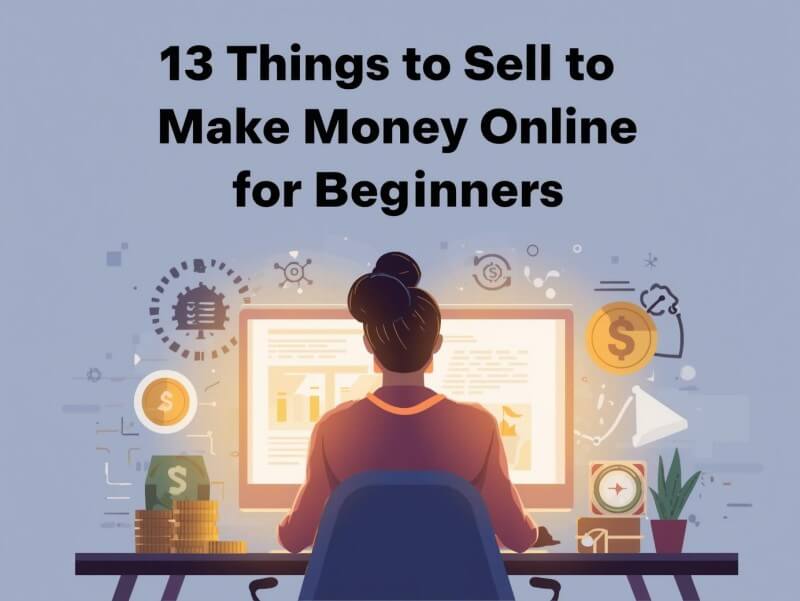
Most people don’t actually want a business. They want income. Fast, simple, and real. I get it. I’ve been there. Staring at the screen, typing random ideas into Google, hoping something clicks.
That’s why this guide on things to sell to make money online isn’t theory. It’s based on what actually moves money, not what sounds sexy on YouTube.
Over the past few years, I’ve tested digital products, templates, AI assets, low-ticket downloads — some worked, some completely flopped.
What I learned is simple: selling online isn’t about being a genius. It’s about solving a small, clear problem and packaging it well. That’s it. No hype. No overnight miracle.
Now with tools like ChatGPT and image generators, it’s easier than ever to Make Money Online with AI. But here’s the part nobody tells you — AI doesn’t print cash. It speeds up production. It lowers your cost. You still need positioning, demand, and consistency. AI is a tool, not a lottery ticket.
And no, this isn’t one of those fake “Make Money in One Hour” promises. Could you make a sale in your first hour? Maybe. But building steady online income usually takes focus and repetition. You test. You adjust. You stack assets. That’s the real game.
So instead of chasing trends, let’s break down practical products you can actually create, launch, and scale. If you’re serious about selling something online, start simple. The right product, sold the right way, can change your financial direction faster than you think.
Printable Planner
If you’re looking for simple things to sell to make money online, printable planners are one of the easiest starting points.
No inventory. No shipping. No customer support nightmares. You design it once, upload a PDF, and that same file can sell 100 times. I’ve seen people overcomplicate online business, but with planners, it’s straightforward: solve one small problem on paper.
When I first tested this niche, I didn’t build anything fancy. I opened Canva, picked a clean layout, and made a daily planner with three sections: top priorities, time blocks, and a habit tracker. That’s it. Nothing revolutionary.
But you’d be surprised how many people are actively searching for “minimalist printable daily planner” on Etsy and Google. You create what they’re already looking for, not what you think looks cool.
A friend of mine in Texas listed a bundle: daily, weekly, and monthly versions together for $12. She didn’t even have a big audience. First month? Around 40 sales. Do the math. That’s almost $500 from a few PDFs she designed over a weekend. Of course, it’s not always that smooth. Some designs flop. Some get zero views. But when one hits, it keeps selling quietly in the background.
The real leverage comes from variation. Change the niche: fitness planner, budget planner, ADHD-friendly layout, student study planner. Same structure, different angle. You’re not reinventing the wheel every time.
You’re just adjusting it for a different driver. And honestly, once you understand how search demand works, you’ll realize printable planners are less about design talent and more about reading the market correctly.
It’s not glamorous. Nobody brags about selling PDFs at a party. But if your goal is steady online income, this model makes sense. Low cost, high margin, scalable. Sometimes boring wins.
AI-Generated Coloring Pages
I didn’t take coloring books seriously at first. I thought it was just kids stuff. But once I started digging into things to sell to make money online, I noticed something interesting — coloring pages never really go out of demand.
Parents need cheap activities. Adults want stress relief. Teachers download printables every week. It’s a quiet market, but it moves.
What changed the game was AI. Before, you needed illustration skills or you had to hire someone. Now? I can generate 50 black-and-white line art designs in one afternoon. Clean outlines. High contrast. Ready for print.
When I first tested it, I focused on a simple niche: “cute animal coloring pages.” No crazy creativity. Just consistent style and proper formatting. Uploaded as a PDF bundle. Priced at $7. It didn’t explode overnight, but it started getting steady traction after a few weeks.
I saw a seller online doing something smarter. Instead of generic themes, she niched down into “Christian Bible coloring pages for kids.” That’s specific. That’s searchable. That’s targeted. Her bundles were priced higher — around $15 — because they solved a very specific audience need.
That’s when it clicked for me. This isn’t about drawing pretty pictures. It’s about matching a group of people with something they already want.
You’ll also notice buyers don’t just want single pages. They want sets. 20 pages. 30 pages. Sometimes 100-page collections. So instead of thinking small, I started building themed packs: Halloween set, winter animals set, fantasy creatures set. Same production workflow. Different angle. Scale comes from repetition, not from reinventing the style every time.
Honestly, AI-generated coloring pages are boring to create after a while. It’s repetitive. But repetitive can mean profitable. Once you understand file formatting, keywords, and bundling, this becomes a system. And systems are what actually make money online — not hype.
Social Media Templates (Instagram / TikTok Templates)
Let me be blunt — most small businesses suck at design. Not because they’re lazy. They’re just busy. They’re trying to sell products, answer DMs, manage inventory. Design is the last thing on their mind. That’s exactly why social media templates sell.
If you’re exploring things to sell to make money online, this one has real demand behind it.
I didn’t start with some huge branding kit. I made 12 simple Instagram post templates in Canva. Clean fonts. Neutral colors. Easy to edit.
I targeted real estate agents because they always need listings, testimonials, “just sold” announcements. Instead of being creative, I studied what they were already posting and made it look 20% better. That’s it. Improvement beats originality most of the time.
You’ll notice something interesting when you browse Etsy or Creative Market. The top sellers aren’t selling random designs. They’re niche-specific. Fitness coaches. Hair salons. Podcast hosts. TikTok carousel hooks.
The more specific you go, the less competition you actually face. A generic “Instagram template” is crowded. “Instagram templates for dentists”? Way less noise.
A buddy of mine built a 30-template TikTok bundle focused only on hook-style slides — bold text, strong contrast, short punchy lines. He priced it at $19. He didn’t have a big audience. But his product solved one clear pain point: “I don’t know how to make my posts look professional.” In two months, he crossed $1,000. Not viral money. But solid.
Here’s the part people underestimate: templates are scalable. Once you create the base layout, you can repurpose it into different niches with minor tweaks. Change the wording. Adjust the colors. Swap the imagery. Done. No shipping. No customer calls. Just files. If you understand what content creators struggle with, you’re not selling graphics. You’re selling clarity and time. And time is expensive.
Notion Templates
I ignored Notion for a long time. Thought it was just another productivity app nerds obsess over. Then I started seeing creators selling Notion templates for $29, $49, even $79. That’s when I paid attention.
If you’re researching things to sell to make money online, this category has serious upside because the perceived value is higher than a simple PDF.
Here’s what most beginners get wrong: they try to build some massive “ultimate life dashboard.” Nobody asked for that. People want specific outcomes. A freelance client tracker. A content calendar for YouTubers. A job application tracker.
When I built my first template, I focused only on tracking affiliate income streams. Clean database. Monthly revenue view. Simple KPI section. It wasn’t fancy, but it solved a real problem.
You’ll find that Notion users are already comfortable paying for systems. They don’t want to build everything from scratch. A guy I saw on Twitter created a “Second Brain for Students” template. He priced it at $39. He showed a demo video explaining how it saves 5–10 hours per week.
That angle — saving time — sells way better than saying “beautiful design.” Nobody buys productivity for aesthetics. They buy it for control.
There’s also a hidden advantage: duplication. Once you build one solid structure, you can tweak it for different audiences. Swap “freelancer” to “agency owner.” Change revenue tracking to expense tracking. Adjust the dashboard view. Same backbone. Different positioning. That’s leverage. And leverage is how you scale without burning yourself out.
Honestly, Notion templates aren’t sexy. It’s database work. Toggles. Linked views. Sometimes it feels dry as hell. But when someone pays $49 for something you duplicated in two clicks, you stop complaining. Systems sell. Clarity sells.
And if you understand workflows better than your audience, you’re not just selling a template — you’re selling structure.
AI Prompt Packs
Let’s be honest — most people using AI have no idea what to type. They open ChatGPT or Midjourney and stare at a blank box. That confusion is where the money is.
When I started exploring things to sell to make money online, AI prompt packs were one of the most obvious opportunities. Not because they’re flashy. Because they remove friction.
I tested this in a very simple way. I collected 50 writing prompts I was already using for blog posts and email sequences. Organized them by purpose: headlines, hooks, product descriptions, storytelling. Cleaned up the wording. Put them into a structured PDF with short explanations. Priced it at $17. No crazy design. Just clarity.
The first week was slow. Then one SEO article started ranking, and the sales trickled in without me touching it again.
You’ll notice something important here. People don’t buy prompts because they can’t write. They buy them because they don’t want to think. Decision fatigue is real. A well-packaged prompt saves time and reduces uncertainty.
I saw a creator selling “100 Midjourney portrait prompts” for $27. Not groundbreaking prompts. Just curated and categorized. That’s the key. Curation has value.
There’s also leverage in specificity. “AI prompts” is too broad. But “AI prompts for Etsy product descriptions” or “YouTube faceless channel script prompts” — now you’re solving a direct business problem. The more tied your prompts are to making or saving money, the easier they sell. General creativity is cool. Revenue-related prompts convert.
And here’s the uncomfortable truth: most prompts online are mediocre. So if you actually test yours and show before-and-after results, you stand out immediately. This isn’t magic. It’s packaging experience. You’re not selling words. You’re selling tested shortcuts. And shortcuts, when they work, are worth paying for.
Stock Photos (AI Image Assets)
I used to think stock photography was saturated. Thousands of photographers. Millions of images. Why even bother? But then AI stepped in and changed the economics completely.
When I started testing stock photos as one of the practical things to sell to make money online, I realized this game isn’t about being artistic — it’s about being strategic.
Instead of random pretty pictures, I focused on commercial intent. Business backgrounds. Website hero images. Abstract tech textures. Clean food shots with copy space. You’ll find that designers and bloggers aren’t looking for “beautiful.” They’re looking for usable. White space matters. Composition matters. And keywords matter even more.
A guy I follow uploads AI-generated office scenes. Just modern desks, laptops, coffee cups. Nothing crazy. But he batches them in themes — “remote work setup,” “startup team meeting,” “minimal workspace.” Uploaded consistently for six months.
His downloads weren’t explosive, but steady. That’s the part most beginners underestimate. Stock photos are slow burn. You build a library. The library works for you.
I tested abstract gradient backgrounds once. Generated 100 variations in two days. Uploaded them across multiple stock platforms. First month? Almost nothing. I almost gave up.
Then around month three, downloads started stacking because multiple designs ranked for similar tags. That’s when it clicked. Volume plus search visibility beats trying to create one “perfect” image.
It’s not instant money. And yeah, you’ll upload a bunch of stuff that never sells. That’s part of the game.
But once your portfolio hits a few hundred assets, it starts behaving like a small digital real estate portfolio. Some pieces rent out. Some sit empty. Overall, the system works if you treat it like a business instead of an art project.
Digital Stickers
I didn’t understand digital stickers until I saw how obsessed iPad planner users are. People aren’t just planning anymore — they’re decorating their digital journals.
Once I paid attention, it made sense. If you’re looking at realistic things to sell to make money online, digital stickers are small products with surprisingly loyal buyers.
What makes this interesting is the psychology. A printable planner is functional. But digital stickers? That’s emotional. Cute icons. Aesthetic labels. Seasonal decorations. People want their planner to feel personal. And once someone buys one sticker pack, they usually buy more. It becomes a collection habit.
I tested this by creating a simple “productivity icon” pack — check marks, clocks, flags, priority labels. Nothing fancy. Transparent PNG files. Around 60 pieces in one bundle. Priced at $6.
I didn’t expect much. But I noticed buyers were leaving reviews saying things like, “Finally something clean and minimal.” That feedback matters. It tells you design direction beats complexity.
One creator I studied went all in on aesthetic themes — pastel study stickers, cottagecore mood icons, even sarcastic planner quotes. She built seasonal drops. Valentine’s set. Fall vibes set. New Year reset pack. That’s smart. You’re not just selling files. You’re selling moments tied to emotion and time of year.
The production barrier isn’t high. Basic design skills. Consistent style. Correct file formatting. The hard part is standing out without overdesigning. Keep it clean. Keep it cohesive. And remember, people buying digital stickers care about vibe as much as function. If you nail that balance, this can quietly stack income month after month.
Ebooks
People love to say ebooks are dead. I’ve been hearing that for ten years. And yet, every year, someone quietly makes solid money selling short, focused digital books.
If you’re researching practical things to sell to make money online, ebooks still deserve a spot on the list — but only if you do them right.
The biggest mistake beginners make? Writing a 200-page “ultimate guide” nobody asked for. That’s ego. What actually sells are specific outcomes. “30-Day Meal Plan for Busy Moms.” “Beginner’s Guide to Freelance Copywriting.” “How to Start a Faceless YouTube Channel.”
Clear problem. Clear result. No fluff. When I tested my first ebook, it was barely 45 pages. Tight. Direct. No filler chapters just to look thick.
I’ve also seen micro-ebooks perform surprisingly well. A creator I followed wrote a 28-page guide on organizing digital photos for families. That’s niche. That’s boring. But it solved a real frustration. She priced it at $19 and marketed it through Pinterest. Not massive numbers, but consistent sales.
That’s the pattern you’ll notice — specificity beats ambition.
Formatting matters more than people think. Clean layout. Short paragraphs. Screenshots when needed. And for God’s sake, edit your grammar. Nothing kills trust faster than sloppy writing. You’re selling information. If the presentation feels amateur, the perceived value drops immediately. I learned that the hard way after getting a blunt review on my early work.
Ebooks aren’t passive in the beginning. You’ll need traffic. SEO, email list, social media — something. But once the system is in place, a digital book can become a quiet asset. No inventory. No customer calls at midnight. Just a file delivering value. It’s simple. Not easy. But simple works.
Budget Spreadsheets / Financial Excel Templates
Money stress is universal. It doesn’t matter if someone makes $2,000 a month or $20,000 — most people don’t track their numbers properly. That’s why budget spreadsheets quietly sell every single day.
When I was exploring boring but reliable things to sell to make money online, financial Excel templates kept popping up again and again.
Here’s what surprised me: people don’t want complicated accounting systems. They want visibility. A clear monthly overview. Automatic totals. Simple debt payoff tracker.
I once built a “Side Hustle Income Tracker” sheet just for creators managing multiple revenue streams. It calculated monthly profit, expenses, and growth percentage automatically. Nothing fancy. Just formulas and conditional formatting. But that automation is what makes it feel valuable.
I saw one seller doing something smart — targeting couples. Her product wasn’t just a budget sheet. It was a “Couples Financial Planning System.” It included shared expense tracking, savings goals, and a date-night spending category. That angle matters.
You’re not selling cells and formulas. You’re selling control over money conversations.
Another detail that moves the needle? Simplicity in onboarding. Add a short video tutorial. Include a “start here” tab. You’ll find that most buyers aren’t Excel experts.
If they open the file and feel confused, refund request. If they open it and understand it in 30 seconds, you win. I learned that after getting emails from users asking where to type their income. That’s when I simplified everything.
This category isn’t sexy. Nobody flexes their spreadsheet purchase on Instagram. But budgeting is tied directly to survival and growth. If your template genuinely helps someone see where their money goes, they’ll gladly pay $15 or $29 for it. Financial clarity is underrated — until you don’t have it.
Digital Wallpapers (Phone / Desktop Wallpaper)
This one sounds almost too simple. Wallpapers? Really? But hear me out. People look at their phone screens hundreds of times a day. Same with their laptop background. That tiny rectangle becomes emotional real estate.
When I was digging into low-friction things to sell to make money online, digital wallpapers kept surprising me with how consistent the demand is.
I didn’t start with some crazy artistic vision. I made a batch of minimalist quote wallpapers. Neutral colors. Clean typography. Motivational, but not cheesy. Stuff like “Focus. Build. Repeat.”
I exported them in multiple phone sizes and desktop resolutions. Bundled 20 together for $5. The key wasn’t creativity. It was compatibility. Different screen ratios. High resolution. No blurry garbage.
You’ll notice trends matter a lot here. Dark mode wallpapers. Aesthetic collage styles. Seasonal themes.
One creator I followed built a whole brand around “Sunday reset” wallpapers — calming pastel backgrounds with simple weekly intentions. She dropped new packs monthly. That consistency built repeat buyers. Not huge spikes. Just steady momentum.
I also tested abstract gradient backgrounds once, similar to stock image experiments. The difference? Wallpaper buyers care about vibe instantly. If it doesn’t feel right in two seconds, they scroll. So previews matter. Mockups matter. Showing the wallpaper on an actual iPhone screen increases perceived value dramatically. Presentation can double conversion rate.
Let’s be honest — this isn’t a high-ticket play. You’re not making $1,000 per sale. But it’s lightweight. Easy to produce. Easy to scale. Once you build a style people recognize, you can keep releasing variations. And sometimes simple products win because they fit into people’s daily habits without friction.
AI Profile Picture Pack
Profile photos used to mean hiring a photographer or awkwardly asking a friend to take 200 shots until one looked decent. Now? AI can generate professional-looking headshots in different styles within minutes.
When I was mapping out modern things to sell to make money online, AI profile picture packs stood out because identity sells. People care about how they show up online.
Here’s what most beginners miss — don’t just sell “one avatar.” Sell variety. Corporate style. Casual startup vibe. LinkedIn-ready headshot. YouTube channel banner version. Same person, multiple angles and moods. That bundle concept increases perceived value immediately.
A single image feels cheap. A pack feels complete.
I watched one freelancer offer a 20-image AI headshot bundle for $39. He asked clients to upload 5–10 selfies, trained a simple AI model, and delivered polished results in different outfits and backgrounds. The crazy part?
Most customers weren’t influencers. They were normal professionals who just didn’t want to book a studio session. Convenience wins.
You’ll also notice niche targeting works extremely well here. Gaming-style avatars for Twitch streamers. Anime-inspired profile pictures for Discord users. Corporate-neutral headshots for consultants. Different audience, same production method. Once you build a repeatable workflow, scaling becomes mechanical.
Of course, quality matters. Bad lighting in source photos? Garbage in, garbage out. You can’t cut corners completely. But if you deliver consistent, clean results, this isn’t just selling images. You’re selling confidence. And confidence online has real monetary value — especially in a world where first impressions are digital.
Print on Demand Designs (POD)
Print on Demand is one of those models that looks easy from the outside. Upload a design, slap it on a T-shirt, wait for sales. Reality? It’s competitive as hell. But it’s still one of the most scalable things to sell to make money online if you understand niche positioning instead of chasing trends blindly.
I learned this the hard way. My first batch of designs was generic motivational quotes. Zero traction. No surprise. Then I switched to a micro-niche: funny slogans for electricians. Specific. Blue-collar humor. Inside jokes only they would get. Suddenly, sales started trickling in. Not viral. But real.
That’s when it clicked — broad ideas drown, niche ideas survive.
You’ll find that POD isn’t really about art skills. It’s about market research. What communities buy merch? Dog owners. Nurses. Gamers. Teachers. Car enthusiasts. Once you identify a tribe, you create for them, not for yourself.
I’ve seen someone build an entire store around sarcastic cat-owner humor and hit consistent monthly income just from mugs and hoodies.
Another underrated move? Volume. Instead of trying to design one “perfect” graphic, create variations. Different colorways. Slightly different phrasing. Seasonal editions. The platforms reward inventory depth. The more relevant listings you have, the more surface area you create for search visibility.
Margins aren’t insane per item. Maybe $5 to $12 profit per sale depending on platform and pricing. But POD compounds. One design today. Another tomorrow. A catalog over time. Treat it like planting seeds, not hunting jackpots. If you stay consistent and avoid copyright stupidity, it becomes a long-term engine instead of a lottery ticket.
Language Learning Materials
Language learning is one of those evergreen markets that never dies.
People are always trying to learn Spanish, English, French, Japanese — whatever helps them travel, get a job, or just feel smarter.
When I was scanning realistic things to sell to make money online, language learning materials stood out because the demand refreshes every year with new learners.
Here’s the part most people overlook: you don’t need to build a full-blown course. In fact, shorter and more focused often works better. Conversation practice sheets. Themed vocabulary flashcards. “Survival phrases for travelers.”
I once tested a 30-day beginner Spanish workbook — just daily bite-sized lessons with simple exercises. Nothing academic. Just practical usage. That practical angle makes it easier to sell.
I saw a creator targeting busy professionals learning English for job interviews. She built mock interview question sheets with sample answers and pronunciation tips. Not a massive ebook. Just structured practice material. She positioned it around confidence and career growth. That emotional hook matters.
Language isn’t just words. It’s opportunity.
You’ll find that packaging helps here too. Printable PDF + audio file bundle. Flashcards formatted for mobile use. Maybe even a Notion-based vocabulary tracker. When you combine formats, the perceived value increases without dramatically increasing workload. Repurposing content is leverage.
Of course, accuracy is non-negotiable. You mess up grammar or pronunciation guidance, your credibility collapses fast. So double-check everything. If you treat it seriously and target a clear audience, language learning materials can become a steady income stream. Not flashy. But steady beats flashy most of the time.
Final Thoughts
If you’ve read this far, you probably realize something. None of these ideas are magic. No secret hack. No “press one button and get rich.” These are practical things to sell to make money online.
Simple digital products. Systems. Assets. Boring? Sometimes. Profitable? Yes — if you actually execute.
I’ve tested enough models to know this: most people don’t fail because the idea is bad. They fail because they quit after 10 days. They upload 3 products, get zero sales, and decide “this doesn’t work.”
You’ll find that almost everything online works — but only after volume, feedback, and adjustment. The first version will suck. That’s normal.
Pick one category. Not five. One. Go 30 days deep. Improve it weekly. Look at search demand. Watch competitors. Fix your packaging. Increase your catalog. Treat it like a small digital factory, not a lottery ticket. Say what you want — consistency beats excitement in this game.
Online income isn’t built on hype. It’s built on assets that compound quietly. One planner. One template. One ebook. Then another. Then another. Stack enough of them and suddenly you’re not hoping for money — you’re managing it. That shift changes everything.
No guru talk. No fake screenshots. Just build something useful and put it in front of people who already want it. That’s the whole play.
FAQ
1) Do I need a big audience to start selling?
No. Honestly, most beginners don’t have an audience anyway.
What you need is search intent or a clear place where buyers already hang out (Etsy, Gumroad, Creative Market, etc.).
You’ll find that a boring product with the right keywords can outsell a “cool” product with zero demand. Start where people are already shopping, not where you hope they’ll show up.
2) What’s the easiest product to launch as a total beginner?
Printable planners, simple templates, and small bundles (like sticker packs or wallpapers).
Why? Low risk, fast production, and you can ship instantly. Don’t try to build a huge course on day one. Get your first sale first. Then improve.
3) How do I price digital products without overthinking it?
Copy the market, then adjust.
That’s the practical answer. Search similar listings, look at what’s selling, and stay in the same range.
If you’re unsure, start slightly lower to get traction, reviews, and data. Once you have proof, raise the price. Pricing is not a philosophy debate — it’s a test.
4) Can I use AI to create these products safely?
Yes, but don’t be sloppy.
Avoid using famous characters, celebrity faces, brand logos, or anything that smells like copyrighted content. If you’re generating art, keep it original. If you’re using AI for writing, edit it so it doesn’t sound robotic. AI helps you produce faster — it doesn’t protect you from dumb mistakes.
5) How many products do I need before I see consistent sales?
It depends, but here’s a real-world range: usually 20–50 decent listings is when things start to feel “alive.”
Some people hit earlier, some later. Digital selling is a catalog game. One product is a lottery ticket. A catalog is a system. The more you publish, the more chances you give the market to find you.
6) Where should I sell: Etsy, Gumroad, or my own website?
Start with a marketplace if you’re new.
Marketplaces already have byers, which means faster feedback. Then, once you know what sells, build your own site for higher margins and control. Think of it like this: marketplaces are training wheels, your site is the long-term vehicle.
7) What if I upload products and get zero sales?
Welcome to reality. It happens to everyone. Don’t take it personally.
Check your keywords, your thumbnails, your pricing, and your niche angle. Then publish more. Most “zero sales” problems are really “not enough attempts” problems. You’re not failing — you’re just early.
8) Is this actually passive income?
In the beginning, no.
It’s work. You create, upload, market, optimize. But over time, yes, it can become semi-passive because your products keep selling while you add new ones. The “passive” part comes from building assets that stay online and keep getting discovered. It’s not magic. It’s compounding.